

Gym numbers guide · October 11, 2026
Is ClassPass Worth It for Gyms? A Gym Owner's Real Funnel Data
By Dai Manuel · Updated October 11, 2026
607 drop-ins became 10 paying members at my gym. Here is what that means for ClassPass economics, which visitors are worth chasing, and when to cap aggregators.
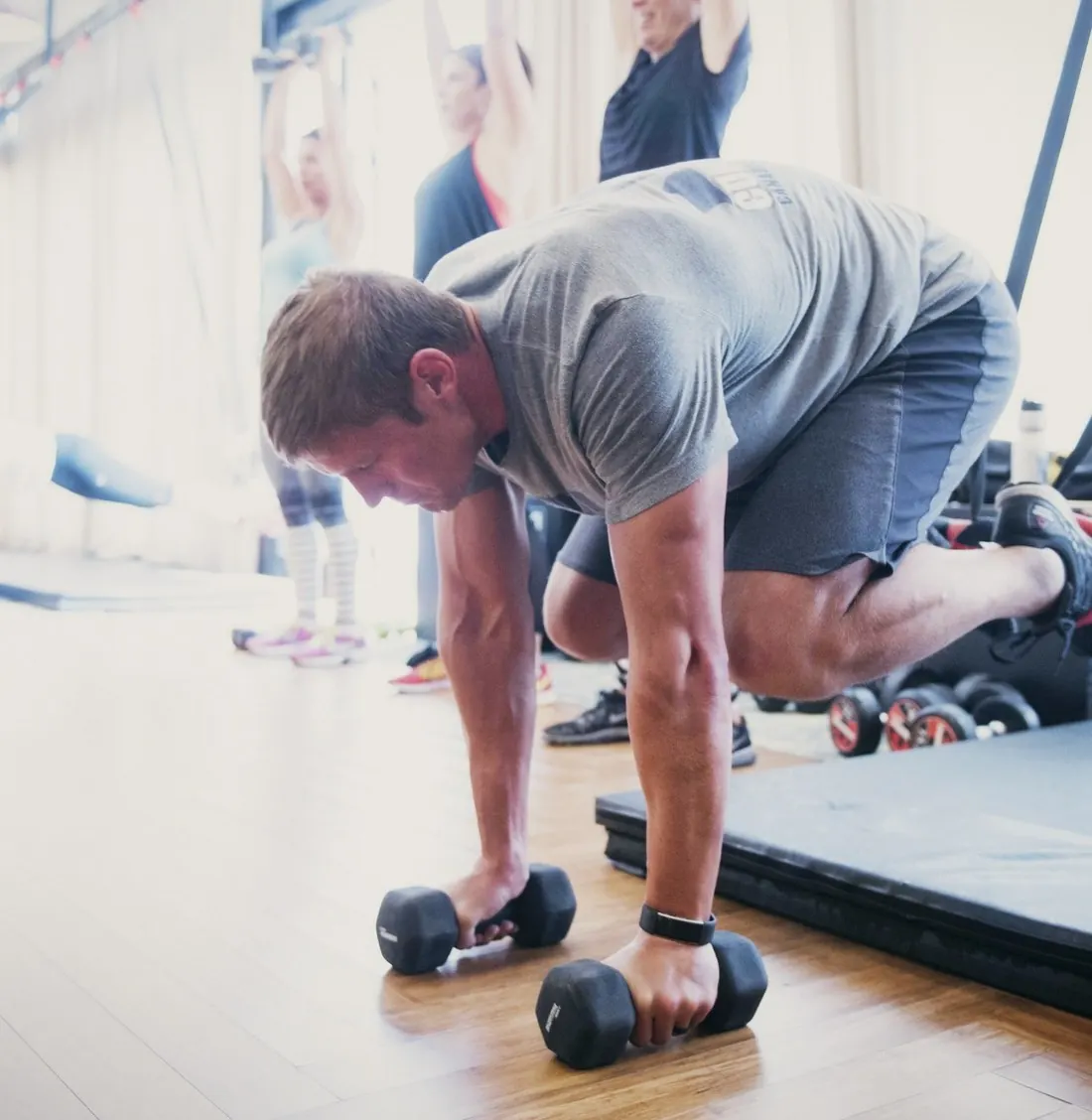
Over the last year, 607 people dropped in at CrossFit BC, the Vancouver gym I co-own, and 10 of them are paying members today. That is 1.6%. ClassPass and other aggregators can still be worth it for a gym, but only if you price the visit as revenue, stop treating every drop-in as a future member, and follow up fast with the few who can actually join.
Key takeaways
Key takeaways
- At CrossFit BC, 607 drop-ins in a year produced 94 leads (15%), 37 clients (6%) and 10 paying members today (1.6%).
- The only widely cited ClassPass benchmark is a 6% average from a 2015 US studio report with no disclosed sample, and it measures first purchase, not retention.
- ClassPass pays against a confidential negotiated floor tied to your own pricing; Wellhub pays per check-in based on retail prices, capped per member per month. Neither publishes rates.
- In a tourist city, roughly half your non-converting drop-ins may be visitors who can never join. Calculate conversion on locals.
- The average drop-in became a lead in 15.7 days, so follow-up has to happen inside two weeks.
- Cap or drop aggregators when they fill spots members want or when regulars use them as a cheap membership.
Here is the full funnel, what the industry data says, how ClassPass and Wellhub say they pay, and the rules I would use to decide whether to keep, cap or drop them.
What does a real drop-in funnel look like?
CrossFit BC drop-in funnel, 12 months to Sep 2026
people
| Condition | Value |
|---|---|
| Dropped in | 607 |
| Became a lead | 94 |
| Became a client | 37 |
| Paying member today | 10 |
These numbers come from CrossFit BC's Wodify records for the 365 days to 12 September 2026.
| Stage | People | Share of all drop-ins |
|---|---|---|
| Dropped in | 607 | 100% |
| Became a lead | 94 | 15% |
| Became a client (bought something) | 37 | 6% |
| Paying member today | 10 | 1.6% |
Two other numbers matter. The average time from first drop-in to becoming a lead was 15.7 days. And contact data was not the problem: all 607 left an email and 596 left a phone number. We had the means to reach almost everyone. We just were not using it in a structured way.
Two caveats before you lean on this. First, Wodify does not tag which drop-ins came through ClassPass, so "drop-in" is the closest proxy I have, and it includes walk-ins from other channels. Second, the local versus visitor split further down is inferred from phone area codes, which is rough. Someone who moved to Vancouver keeps their Ontario number, and a BC number tells you nothing about which side of the Lions Gate Bridge they live on.
How does that compare with industry ClassPass conversion rates?
Drop-in conversion: first purchase vs retained member
% of drop-ins
| Condition | Value |
|---|---|
| Industry average, bought membership or pack (AFS 2015, US) | 6 |
| CrossFit BC, became a client | 6.1 |
| CrossFit BC, paying member today | 1.6 |
There is very little published data on ClassPass conversion. The figure everyone quotes comes from the Association of Fitness Studios' 2015 benchmarking report, as summarised by ClubIntel's Stephen Tharrett and Mark Williamson in Health Club Management in 2016. The average conversion for US studios using ClassPass was 6%, with most under 10% and some as low as 2%. The sample size was not disclosed. Their definition was a unique ClassPass visitor who bought a membership or a class pack.
That definition lines up with our "client" stage, and our client rate was 6% too. So on the old industry measure, we look average. The difference is what happens next. Only 10 of those 37 clients are still paying. A class pack is a purchase, but it does not make someone a member, and the 2015 number tells you nothing about who is still around a year later.
Wodify's April 2026 piece by Grace Bettino frames ClassPass as a top-of-funnel tool, useful for first visits and awareness, with guardrails so it does not replace membership. It cites an Athletech News figure that 94% of ClassPass users are new to the studios they visit, and says ClassPass conversions were competitive with channels like events, without giving a number. Keep in mind that Wodify sells software with a ClassPass integration. The framing is reasonable. The evidence is one operator's experience.
My read: a decade-old 6% from US boutique studios is the only widely cited benchmark, it measures first purchase rather than retained members, and nobody should plan a budget around it.
How do ClassPass and Wellhub pay gyms?
Both publish partner pages. Here is what they say, and what they leave out.
| ClassPass | Wellhub (formerly Gympass) | |
|---|---|---|
| What sets your payout | A confidential, negotiated rate floor based on a percentage of your direct membership or drop-in pricing | Your standard retail prices, with the method varying by partner type |
| Dynamic pricing | SmartRate moves the credit price up or down with demand, and ClassPass says payouts never fall below your floor | Not described |
| Published ceiling or cap | No maximum described | Paid check-ins are capped per member per month (number not published); a volume discount may apply past monthly earning thresholds |
| Late cancels and no-shows | ClassPass matches your late-cancel window up to 12 hours and says partners are typically paid for no-shows | Partners may not charge Wellhub users late-cancel or no-show fees |
| When you get paid | Monthly, calculated in the first week for the prior month, paid through Tipalti; some partners bi-weekly | Monthly, around the 15th, for the prior month's check-ins |
Neither company publishes actual rates. For a historical anchor only: the 2016 Health Club Management piece reported that studios then typically received about half the base price of their cheapest class pack per ClassPass visit, roughly 40% of a single-session price, and urged operators to negotiate above that. That was anecdotal and is ten years old. Your own contract is the only number that counts.
Wellhub also says partners cannot require a minimum number of visits from its users, though they can charge for extras like personal training.
What is a ClassPass visit worth compared with a member?
This is where most owners get it wrong. They compare the aggregator payout to their drop-in rate, feel insulted, and stop there. The better comparison is what a visit pays against what a member is worth over their lifetime, and what that visit costs you.
Here is the framework, using example numbers that are not my gym's. Swap in your own.
| Example input | Value |
|---|---|
| Aggregator payout per visit | $15 |
| Membership | $200 a month |
| Average member stay | 12 months |
| Member lifetime value | $2,400 |
| Conversion to retained member | 1.6% |
Per 100 drop-in visitors at those example numbers, you collect $1,500 in visit payouts. At 1.6% you also get 1.6 members, worth about $3,840 over their lifetime. Most of the long-term value sits in the conversions, which is why follow-up matters more than the payout rate.
Now the cost side. An aggregator visit in a class that would otherwise run with an empty spot costs you almost nothing. The same visit in a full 6 a.m. class costs you a member's spot, a coach's attention and possibly a member's patience. The payout is good money for empty capacity and bad money for full capacity. If you have not done the maths on your own membership tiers, my piece on gym membership pricing decisions walks through it.
The tourist-city problem
Where non-converting drop-ins came from (by phone area code)
people
| Condition | Value |
|---|---|
| BC local | 261 |
| Elsewhere in North America | 126 |
| International | 52 |
| Missing or unclear | 74 |
Vancouver is a city people visit. Of the 513 drop-ins at CrossFit BC who never became leads, 261 (51%) had BC area codes. Another 126 had numbers from elsewhere in North America, 52 were international, and 74 were missing, junk or unclear.
So only about half of the people who never converted could plausibly have become members. The rest were travellers, business visitors and people passing through. They paid for a class, many had a good time, and they went home. No follow-up sequence turns a visitor from Denver into a Vancouver member.
If your gym is in a tourist or conference city, your raw drop-in conversion rate will always look bad, and that is fine. Count the visitor revenue as visitor revenue. Then calculate conversion only on locals, because that is the group your sales effort can move. In a commuter suburb the picture will be different, and you should expect a much higher share of locals.
Which drop-ins are worth chasing?
Not every drop-in deserves a phone call. With a limited front desk and coaching team, I would rank them like this:
- Local phone number or local address.
- Booked a beginner or intro-friendly class rather than the hardest session on the schedule.
- Came more than once.
- Asked a coach a question about programming, goals or schedule.
- Lives or works within a realistic commute.
Someone who ticks the first box and two others goes on the list. A visitor with a foreign number who came once gets a thank-you email and nothing more. This is how we keep the weekly list to about five names, which a coach can actually work.
When should you follow up with a drop-in?
Our average gap between a first drop-in and becoming a lead was 15.7 days. That tells you the decision window. Most people who are going to move do so in the first two weeks, while the class is still fresh and before the next aggregator studio replaces you.
A follow-up that starts on day 20 is following up with someone who has already decided. Your system should run inside that two-week window and finish around day 12.
The four-touch follow-up CrossFit BC runs now
In September 2026 we started a four-touch sequence over 12 days, for BC-local drop-ins only:
- Day 1: a text or email asking how the class went.
- Day 3: a phone call that asks about their training. No selling.
- Day 7: an email with our free trial offer.
- Day 12: a short close.
Each week the team gets a list of about five names. It is too new for me to report results, and I will not pretend otherwise. I will publish what it does once there is enough data to mean something.
The logic is simple. The day 3 call is the one that matters most, because a coach asking "what are you training for?" is the conversation an aggregator app can never have. Most of the retention work starts there. My notes on gym retention in Vancouver cover what happens after someone joins, and the member case study has more on how we work with members once they join.
When should you cap or drop ClassPass?
Aggregators earn their place when they fill empty spots with people who might become members. They lose it when they fill spots members want, or when regulars use them as a cheap membership.
| Signal | What to do |
|---|---|
| Aggregator users regularly take spots in classes that sell out with members | Remove those time slots from ClassPass |
| A handful of aggregator users visit every week for months | Tighten caps; they are using you as a discounted membership |
| Drop-ins rarely book beginner-friendly classes and struggle in advanced ones | Restrict aggregators to intro or foundations classes |
| Member complaints about crowding or class quality | Cap spots per class, as low as two |
| Local conversion stays near zero after a structured follow-up | Treat it as pure visitor revenue or drop it |
| Classes are well below capacity and local conversion is decent | Keep it, possibly open more slots |
Wodify suggests watching 90-day loyalty at your location. If the same aggregator users keep coming back for 90 days without joining, ClassPass has become their membership and your guardrails need tightening. Its other tactics match what I would do: off-peak slots only, a shorter booking window for aggregator users than for members, and limits of as few as two spots per class.
Dropping aggregators entirely makes sense when your classes are full most of the week, when your conversion on locals stays negligible even after you have run a real follow-up for a few months, or when your negotiated floor is below your marginal cost of coaching that spot.
What to measure this week
- Add a source field to every drop-in record so you can separate ClassPass, Wellhub, walk-ins and referrals. This is the gap in our own data.
- Split drop-ins into local and visitor, by postal code if you collect it, by area code if not.
- Track four stages: drop-in, lead, client, member still paying at 90 days.
- Measure days from first visit to lead. If yours is close to our 15.7, your follow-up needs to finish inside two weeks.
- Pull your aggregator payout per visit from the partner dashboard and compare it with your member lifetime value, not your drop-in price.
- Check which classes aggregator users book and whether any of those sell out with members.
If you want a second set of eyes on your own funnel and payouts, I do a free 20-minute call through my gym numbers consulting where we go through exactly these numbers, and you can start by booking a gym numbers teardown.
Common questions
Is ClassPass worth it for a small gym?
It can be, if your classes have empty spots and you follow up with local drop-ins inside two weeks. Price each aggregator visit as revenue for spare capacity, and count members as the upside. If your classes are full or your conversion on local drop-ins stays near zero after a structured follow-up, the case gets weak. Track source, local versus visitor, and 90-day retention before deciding.
What is a good ClassPass conversion rate?
The most quoted figure is a 6% average from the Association of Fitness Studios' 2015 US benchmarking report, with most studios under 10% and some at 2%. That counted anyone who bought a membership or class pack. At CrossFit BC, 6% of drop-ins bought something, but only 1.6% are paying members a year later. Measure retained members, not first purchases.
How much does ClassPass pay gyms per visit?
ClassPass does not publish rates. Its partner pages say each partner negotiates a confidential rate floor based on a percentage of its direct membership or drop-in pricing, and SmartRate pricing moves above that floor with demand. Payouts are calculated monthly. A 2016 trade report said studios then received about 40% of a single-session price, but that figure is old and anecdotal.
Can I limit how many ClassPass users book my classes?
Yes. Common tactics include offering only off-peak classes, capping aggregator spots per class (some gyms use two), using a shorter booking window than members get, and restricting advanced formats to intro classes. Wellhub is stricter in one way: its support pages say partners cannot require Wellhub users to complete a minimum number of visits or charge them late-cancel fees.
How fast should I follow up with a drop-in?
Within a day. At CrossFit BC, the average gap between a first drop-in and becoming a lead was 15.7 days, so the decision happens in the first two weeks. Our sequence runs day 1 (how did it go), day 3 (a coaching call, no selling), day 7 (trial offer) and day 12 (a short close), for local drop-ins only.
Sources
- Friend or foe? (Part two of internet middlemen series), Stephen Tharrett and Mark Williamson, Health Club Management via Fit Tech, 2016
- How I Used ClassPass as a Lead Machine (Without Letting It Eat My Business), Grace Bettino, Wodify, 2026
- ClassPass Payouts, Pricing, and Policies: How Rates Are Set and How Partners Get Paid, ClassPass Partners, 2026
- What is SmartRate?, ClassPass Partners, 2025 (updated 2026)
- How Payments Work at Wellhub, Wellhub Partner Base, undated
- Can gyms or studios limit access or charge extra fees for Wellhub members?, Wellhub Help Centre, undated
Next step