

Gym numbers guide · October 11, 2026
Average Revenue Per Member at a Gym: ARM Benchmarks and 6 Levers
By Dai Manuel · Updated October 11, 2026
Most gym owners overstate their ARM because they average across every membership type. Here is how to calculate it by tier, what the 2025 benchmarks look like in Canadian dollars, and six levers that raise it without touching your base price.
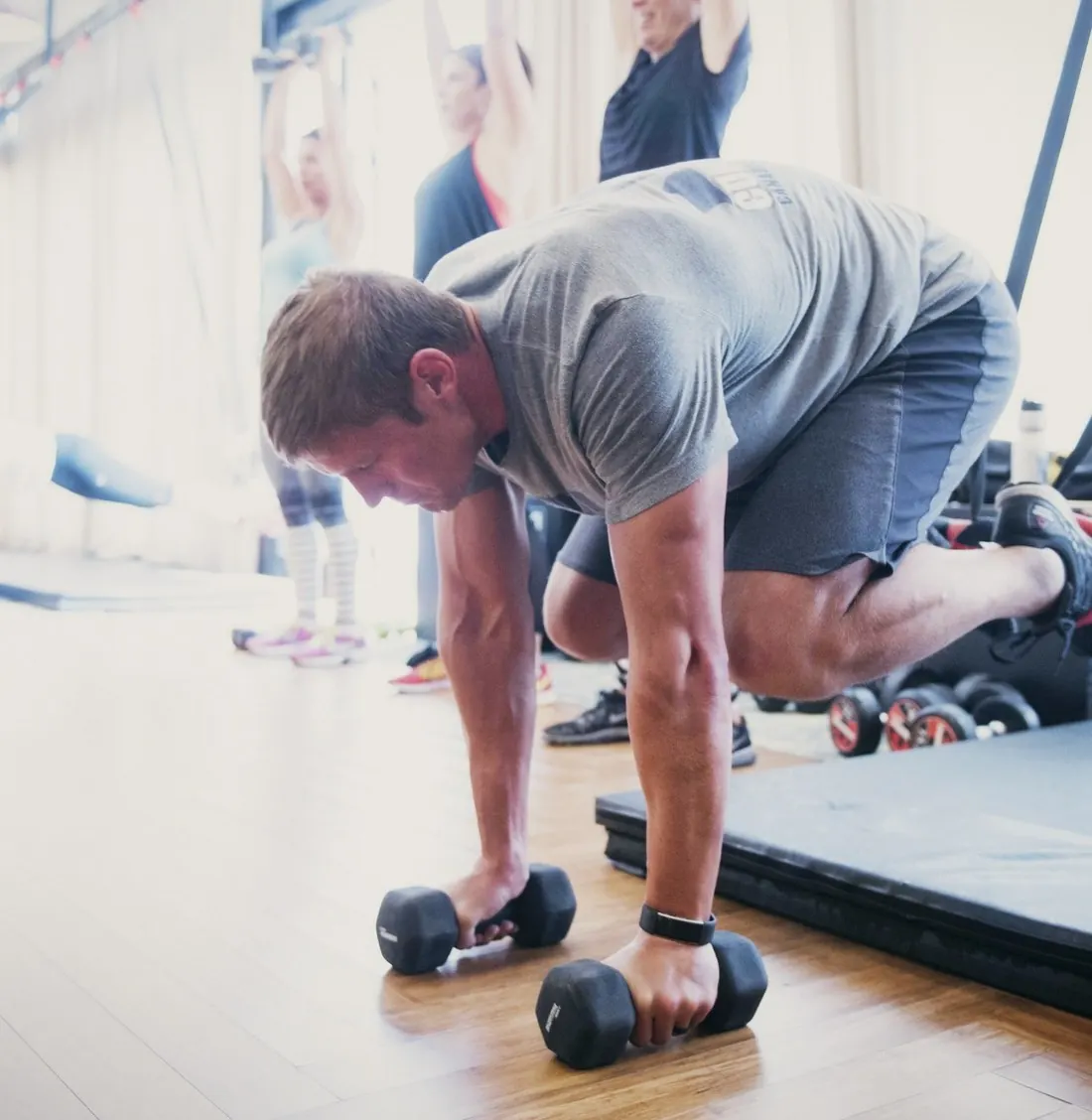
An above-average group-class gym brought in US$187 or more per member per month in 2025, according to Two-Brain Business's State of the Industry data from about 7,000 gyms. At the Bank of Canada rate on 9 October 2026, that is roughly C$267. Plenty of group gyms fall well short of it once they calculate the number honestly.
Key takeaways
Key takeaways
- Calculate ARM as membership revenue divided by paying members only, with prepayments spread across the months they cover.
- Run ARM by tier (group, small group, one-on-one, add-ons) before you look at the blended figure.
- Two-Brain's 2025 above-average thresholds were US$187 for big group, US$288 for small group and US$360 for one-on-one, roughly C$267, C$411 and C$514 at the 9 October 2026 Bank of Canada rate.
- The biggest ARM gains usually come from changing the mix (higher-touch tiers, add-ons, ending legacy rates) rather than raising the base price.
- Discounts lower ARM for as long as the discounted member stays, and a 20% cut needs 25% more members to break even on revenue.
- With Canadian small fitness centres averaging a 12.0% net margin in 2024 (ISED), extra revenue per member matters more than extra members.
Average revenue per member (ARM) is the most useful single number in a coached gym. It tells you whether your price, your offer mix and your sales process are working together. It is also the number owners most often fudge, usually without meaning to. This guide covers how to calculate it properly, what the benchmarks look like in Canadian dollars, and six levers I would pull before ever sending a "rates are going up" email.
If you have not settled your base pricing yet, start with how I think about gym membership pricing decisions, then come back here.
How do you calculate average revenue per member?
The formula is simple: membership revenue for the month divided by the number of paying members that month.
PushPress, which builds the Two-Brain business report into its software, defines it the same way. Only payments for membership services count, free services are left out, and the divisor is paying members. Multi-month and annual prepays are spread evenly across the months they cover (up to 12) so one big payment does not inflate a single month.
The trouble starts with what owners put on each side of that division. Here is what I would do.
Count paying members only. Staff memberships, coach comps, partner swaps and free trials go in a separate column. Including them drags ARM down and hides the real price your members pay. Leaving their attendance in your class counts while leaving them out of ARM is fine, as long as you know how many there are.
Spread prepayments. A member who pays $2,200 for a year contributes about $183 a month to ARM, not $2,200 in January and nothing for eleven months.
Exclude one-off retail. Shirts, supplements and drop-in fees from visitors belong in a different line. ARM is a measure of what your ongoing members are worth each month.
Calculate it by tier, then blended. A single blended ARM hides the most important story in your business. If 6 one-on-one clients at $600 a month sit alongside 120 group members, your blended number looks healthy while your group product may be underpriced. Run ARM separately for group, small group, one-on-one and add-ons, then calculate the blended figure.
Flag discounted and legacy members. Count them as paying members, because they are, but tag them so you can see how much of your ARM gap comes from old rates.
What is a good ARM for a gym in Canada?
Two-Brain's 2025 report, as summarised by Morning Chalk Up, sorted gyms into four models and set traffic-light bands for each. The figures are in US dollars. I have converted them at the Bank of Canada's daily rate of 1.4271 CAD per USD, published for 9 October 2026, and rounded to the nearest dollar.
| Gym model | Above average (US$) | Above average (approx. C$) | Average band (US$) | Below average (US$) |
|---|---|---|---|---|
| Big group (classes) | $187+ (up from $169 in 2024) | $267+ | $126 to $186 (about C$180 to C$265) | $125 or less (about C$178) |
| Small group | $288+ | $411+ | Not published in the summary | Not published in the summary |
| One-on-one (personal training) | $360+ | $514+ | Not published in the summary | Not published in the summary |
Source: Two-Brain Business State of the Industry 2025, about 7,000 gyms on Wodify and Kilo, with big-group gyms making up 68.6% of the sample. Conversion: Bank of Canada, 9 October 2026.
Three cautions before you hold your gym up against that table.
The exchange rate moves. The Bank of Canada's 2025 annual average was 1.3978, which would put the big-group threshold closer to C$261. Recalculate with the current rate when you read this.
A currency conversion is not a price-parity adjustment. Rent, wages and what members will pay in Vancouver, Saskatoon and Halifax are all different from the US gyms that dominate the dataset. Treat the CAD figures as a reference point, not a target someone has validated for Canada.
The bands describe the model you run. Compare your group ARM with the group band and your one-on-one ARM with the one-on-one band. Comparing a blended ARM with the group band flatters any gym that sells personal training.
I could not find a published Canadian gym pricing survey with a disclosed sample to sit alongside these numbers. Crowd-sourced cost-of-living sites exist, but they measure a single "gym membership" in a business district, which tells a coached gym very little.
Why the gap between group, small-group and one-on-one ARM matters
Above-average ARM threshold by gym model, 2025 (converted to CAD)
C$ per member per month
| Condition | Value |
|---|---|
| Big group | 267 |
| Small group | 411 |
| One-on-one | 514 |
Look at the above-average thresholds side by side: roughly C$267 for big group, C$411 for small group and C$514 for one-on-one. A member who moves from group to small group is worth about 1.5 times as much each month. A member who moves to one-on-one is worth nearly twice as much.
That gap is the whole argument for tiers. Most gyms cannot raise their group price by 50% without losing people. They can move a small share of members, the ones who want more attention, a specific outcome or a schedule that classes do not fit, into a higher-touch service that is priced for the coaching time it uses.
The gap also explains why blended ARM can rise while every individual price stays flat. Change the mix and the average follows.
Margins are why this matters in Canada. Industry, Science and Economic Development Canada's small-business data for fitness and recreational sports centres (NAICS 71394, 2024, 7,086 businesses with revenue between $30,000 and $5 million) shows an average net profit margin of 12.0%. Rent alone averaged 17.4% of revenue, and labour and commissions 26.1%. Statistics Canada put the whole fitness and recreational sports centre industry's 2024 operating margin at 8.3%. With costs that heavy and mostly fixed, a few extra dollars per member per month go almost straight to the bottom line, and a few dollars lost to discounts come straight out of it.
Six ways to raise ARM without a blanket price rise
A blanket increase has its place, and Two-Brain's own advice includes a small annual increase disclosed at signup. But it is the blunt tool. These six levers raise ARM by giving members more of what they already want, and none of them requires touching your base group rate.
1. Add a higher-touch tier
Create one clear step up from group: small group (four to eight people with one coach) or a hybrid of group classes plus a monthly one-on-one session. Price it on coaching time, not on what feels comfortable. The benchmarks above suggest the market already supports a much higher price for this service than for open group.
2. Sell nutrition coaching as an add-on
Nutrition coaching uses little floor space and fits into the gaps in a coach's day. Sell it as a monthly add-on with a clear outcome and a fixed number of check-ins. Because it sits on top of an existing membership, it raises ARM without adding a new member to your count.
3. Run goal reviews every 90 days
A goal review is a 20 to 30 minute sit-down where a coach asks what the member wants next and whether their current plan will get them there. Two-Brain profiled a Colorado microgym (Northglenn Health and Fitness, 2020) that used regular reviews of roughly this kind to move members into personal training and nutrition. That is one gym's account, not a controlled study, but the logic holds: you cannot offer the right service if you never ask what someone needs. Goal reviews also help retention, which I cover in my guide to gym retention.
4. Build specialty programmes with an end date
A six- or eight-week block with a defined goal (a strength cycle, an Olympic lifting course, race preparation) gives members a reason to pay for something extra without changing their base membership. Race-specific blocks are an obvious fit right now. CrossFit BC, which I co-own, runs HYROX classes and a HYROX bootcamp, and if you are weighing that route for your own gym, read my breakdown of HYROX affiliation for a small Canadian gym first.
5. Offer annual prepay, priced carefully
Be clear about what annual prepay does. Under the PushPress definition, a prepayment is spread across the months it covers, so a prepay at a discount actually lowers ARM for those members. What it improves is cash on hand and commitment. I would offer it at a modest saving, cap how many prepays you sell at that saving each year, and never let it become the default way people join.
6. End legacy discounts on a schedule
Founder rates, "friends and family" deals and pricing from five years ago add up. Give every legacy member written notice, a date, and a choice: move to the current rate, or move to a lower tier that matches their current attendance. Some will leave. Run the numbers first (see the worked example below) so you know how many departures you can absorb and still come out ahead.
Why discounting is the fastest way to lower ARM
A discount feels like a small concession at the front desk. The maths says otherwise. If you cut a $220 membership by 20% to $176, you need 25% more members just to bring in the same revenue, and every one of those extra members takes floor space, coaching attention and a spot in a class that may already be full.
Discounts also anchor. A member who joined at a promotional rate tends to judge every later price against that number, which makes the move to full price feel like an increase rather than the end of a promotion. And discounted members are counted in your ARM, so a busy January promotion can quietly drag your average down for a year or more.
If you need a promotion, I would discount the first month of a higher tier rather than the ongoing price of your base membership. It protects the base rate and introduces people to the service you want them to stay in.
A worked example: raising ARM by about 11% in 90 days
Worked example (illustrative numbers): blended ARM after each change
C$ per member per month
| Condition | Value |
|---|---|
| Starting ARM | 227 |
| Add nutrition coaching | 239 |
| Goal reviews move 5 to small group | 243 |
| End legacy rates | 251 |
Every number in this section is an example I made up to show the method. None of it comes from CrossFit BC or any real gym.
Starting point. A group gym has 136 paying members and 8 free memberships (staff and comps), bringing in $30,875 a month in membership revenue.
- 80 unlimited group members at $220
- 25 twice-a-week group members at $165
- 15 legacy group members at $150
- 10 small-group members at $330
- 6 one-on-one clients at $600
Blended ARM is $30,875 ÷ 136 = $227. If the owner had divided by all 144 members, including the free ones, they would have reported $214, which understates the real price members pay. Group-only ARM (the 120 group members) is $23,975 ÷ 120 = $200, below the C$267 above-average reference.
Over the next 90 days the owner makes three changes.
- Sells a nutrition coaching add-on at $160 a month to 10 existing members: +$1,600. Members stay at 136. ARM rises to about $239.
- Uses goal reviews to move 5 unlimited group members into small group: +$550 ($110 each). ARM rises to about $243.
- Gives the 15 legacy members 60 days' notice of the $220 rate. Two leave; 13 move up. Revenue changes from $2,250 to $2,860: +$610. Paying members fall to 134.
Result. Revenue of $33,635 across 134 paying members gives an ARM of about $251, up roughly 10.6%, with two fewer members and no change to the base group price.
For comparison, a 2% increase across every member in the starting example would add about $618 a month. The three changes above add $2,760.
What to measure this week
- Pull last month's membership revenue and divide it by paying members only. Write down the result and how many free or comp memberships you excluded.
- Calculate ARM separately for each tier, then blended.
- List every member on a legacy or discounted rate and the monthly gap between what they pay and your current price.
- Count how many members have had a goal review in the past 90 days.
- Check how prepayments are recorded in your software and confirm they are spread across the months they cover.
If you want a second set of eyes on those numbers, that is exactly what my gym numbers consulting is for: we look at your ARM by tier, your discounts and your mix, and pick the one or two levers worth pulling first. Book a gym numbers teardown and bring last month's revenue report.
Common questions
What does ARM mean for a gym?
ARM stands for average revenue per member. It is the monthly membership revenue a gym collects divided by the number of paying members that month. The Two-Brain business report, as built into PushPress, excludes free services, counts only paying members and spreads multi-month payments across the months they cover. It is the clearest single measure of whether your pricing and offer mix are working.
What is a good average revenue per member for a CrossFit or group gym?
Two-Brain's 2025 State of the Industry data put above-average big-group gyms at US$187 or more per member per month, with US$126 to US$186 counted as average. At the Bank of Canada rate of 1.4271 on 9 October 2026, that is roughly C$267 and above. Treat the CAD figure as a reference point: costs and pricing in Canada differ from the mostly US dataset.
Should I include personal training clients in my gym ARM?
Include them in your blended ARM, but always calculate a separate ARM for each tier as well. One-on-one clients pay far more than group members, so mixing them in can make an underpriced group product look healthy. Compare your group ARM against the group benchmark and your personal training ARM against the one-on-one benchmark.
How can I increase revenue per member without raising prices?
Change the mix rather than the base price. Add a small-group or hybrid tier, sell nutrition coaching as an add-on, run goal reviews every 90 days, build specialty programmes with an end date, and move legacy discounted members to current rates on a set schedule. Annual prepay helps cash flow, though a discounted prepay lowers ARM slightly.
Does annual prepay raise ARM?
Not directly. Under the PushPress definition used for the Two-Brain report, a prepayment is spread evenly across the months it covers, so a discounted annual prepay slightly lowers ARM for those members. Its value is cash in the bank and a firmer commitment. Offer it at a modest saving and limit how many you sell at that price.
Sources
- How does your gym stack up? Two-Brain Business releases annual State of the Industry report, Morning Chalk Up, 2025
- Core: Two-Brain Business Report (metric definitions), PushPress Help Centre
- How to Beat Inflation by Increasing Average Revenue Per Member, Two-Brain Business, 2023
- $314 Average Revenue Per Member: How Jennifer Dawson Did It, Two-Brain Business, 2020
- Canadian Industry Statistics: Fitness and recreational sports centres (NAICS 71394), financial performance, ISED Canada, 2024 data
- Amusement and recreation industry, 2024, Statistics Canada The Daily, 2025
- Daily exchange rates, Bank of Canada, 2026
- Annual average exchange rates, Bank of Canada, 2025
Next step